
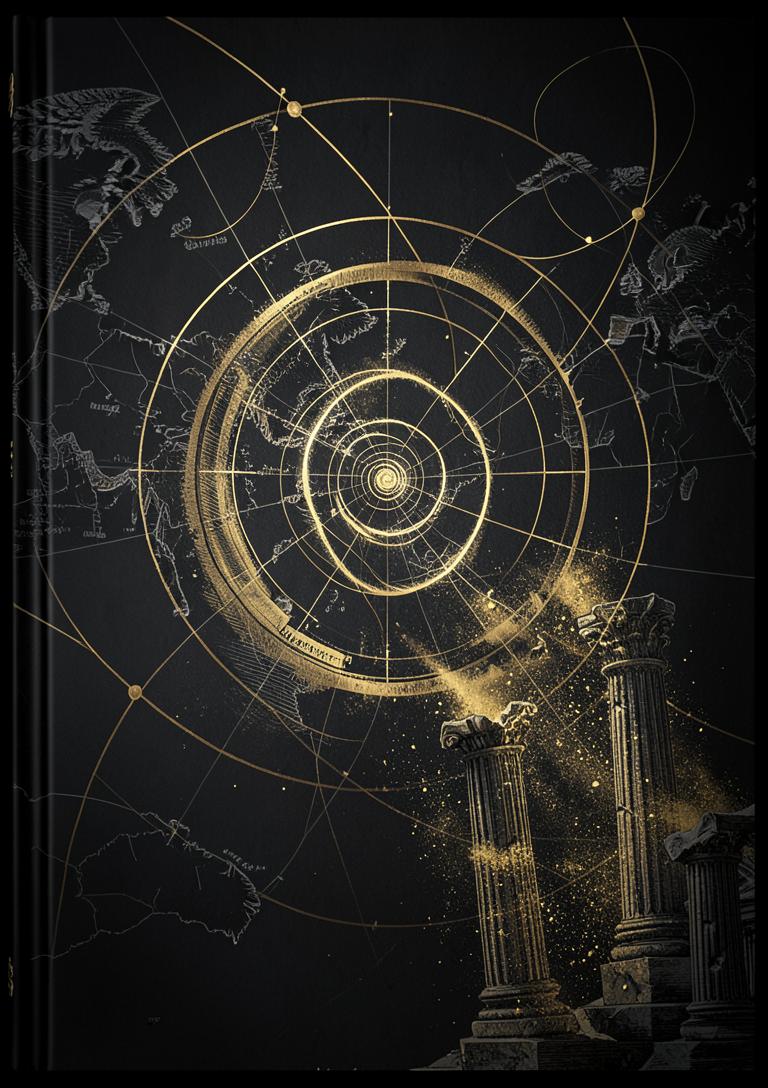
The Great Transformations
A Journey through History and Control
The great transformations in history are not isolated events, but shifts in who holds the power to interpret the world; whoever holds that power holds the power to control.
Overview
A journey that begins with the question of origins—how do the universe and life emerge from nothingness?—then extends through history to trace the great transformations in human consciousness and in the forms of control exercised over human beings. The book compares what religious texts say with what modern sciences offer, and examines how systems arise that redirect the course of humanity in the name of religion, science, or politics.
Central Idea
The great transformations in history are not isolated events, but shifts in who holds the power to interpret the world; whoever holds that power holds the power to control.
Arguments
- The creation narrative is the point of departure for any conception of the human being and the human place in the world.
- An intersection between text and science is possible when the text is freed from historical projection.
- Every great transformation has been accompanied by a transformation in the instruments of control over consciousness.
- Reading the regularities of history obviates the need for conspiracy theory and explains more than it does.
Chapters
The Creation of the Universe and the Formation of Life
The beginning from nothingness: a multidimensional concept
The Qur’an between Faith and Science
The conception of creation and its comparison with the Torah and the Gospel
The Human Being in History
From primordial disposition to institution
Instruments of Control
Religion, knowledge, authority, money
The Coming Transformation
The questions of the present and the responsibility of consciousness
Excerpt
The beginning from nothingness is one of the most profound concepts that human minds have addressed… How can the universe and life emerge from nothing? A question that has long perplexed philosophers, scientists, and religious believers alike, and that reflects the limits of our understanding in grasping the cosmic beginning.