About the Researcher
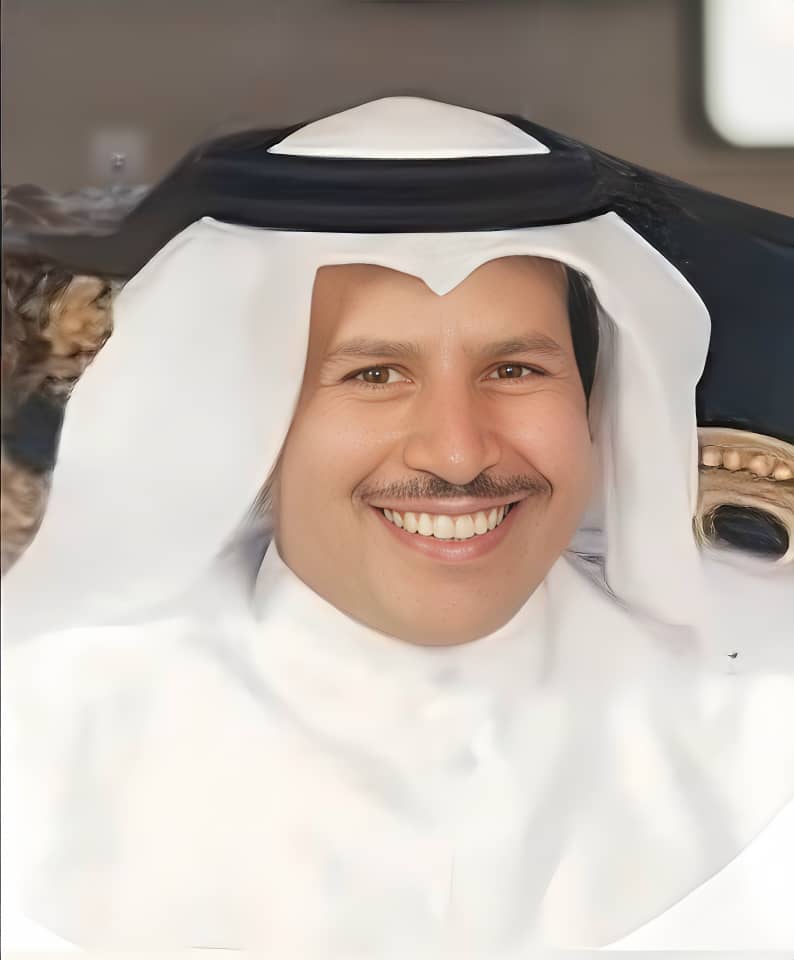
Abdullah Juma Al-Mudahka
Researcher and author of the theses, essays, and books published here.
I am a researcher and writer interested in the Qur’an, Jewish thought, comparative religious thought, history and heritage, and the relationship between the human being, religion, and the universe.
Career & Education
United Kingdom
Royal Military Academy Sandhurst
United Kingdom
He received his education in the United Kingdom, studying at one of the world’s most prestigious military academies.
United States
Specialization in Occupational Health & Safety
United States
He continued his studies and specialization in the United States in the field of Occupational Health and Safety.
Nearly 15 years
Qatar Armed Forces
Qatar
He began his professional career with nearly fifteen years of service in the Qatar Armed Forces.
Energy sector
RasGas
Qatar
He then moved to work at RasGas, at the heart of Qatar’s energy sector.
Current chapter
Qatar Foundation
Qatar Foundation
He continued his career at Qatar Foundation, in the fields of health, safety, and risk management.
Over two decades
Accumulated expertise
Methodical analysis & decision-making
Broad experience in institutional work, methodical analysis, risk assessment, evidence examination, and data-driven decision-making.
I do not start from a predetermined conclusion and search for what supports it; I start from the text and let the evidence lead.
From Research to Method
In parallel with his professional career, long years of reading and research extended into the Qur’an, Jewish thought, comparative religion, and the history of ideas. As this research accumulated, his interest evolved from studying ideas as they reached us to attempting to return to the texts themselves, asking a more fundamental question:
What does the text say if we read it from within?
From here his method of reading the Qur’an took shape: he begins from the text, gathers the relevant verses, traces words and concepts, connects contexts, and then tests the hypotheses that arise — rather than starting from a predetermined conclusion and searching for what supports it.
He is careful to distinguish between:
- What the text states explicitly.
- What reflection (tadabbur) may lead to.
- And what remains a testable hypothesis.
He does not present his research as a final or closed reading, but offers it for inquiry, discussion, and objection, leaving it to the reader to test the evidence for themselves.
An idea draws its strength not from its author, but from its ability to withstand proof.
From this vision came the “Tadabbur” project:
A space for reading the Qur’an from within, connecting verses, contexts, and concepts, and opening questions rather than closing them — with the conviction that difference is part of inquiry, and that an idea draws its strength not from its author, but from its ability to withstand proof.
The goal is not victory for an idea, but the search for truth wherever the text and the evidence lead.
His Works
The three reading paths of his project: the major theses, the long-form essays, and the books.
Share this page
Copy the page link, or share the essence of the method as a ready quote.
A space for reading the Qur’an from within, connecting verses, contexts, and concepts, and opening questions rather than closing them — with the conviction that difference is part of inquiry, and that an idea draws its strength not from its author, but from its ability to withstand proof.