The Hidden Thread
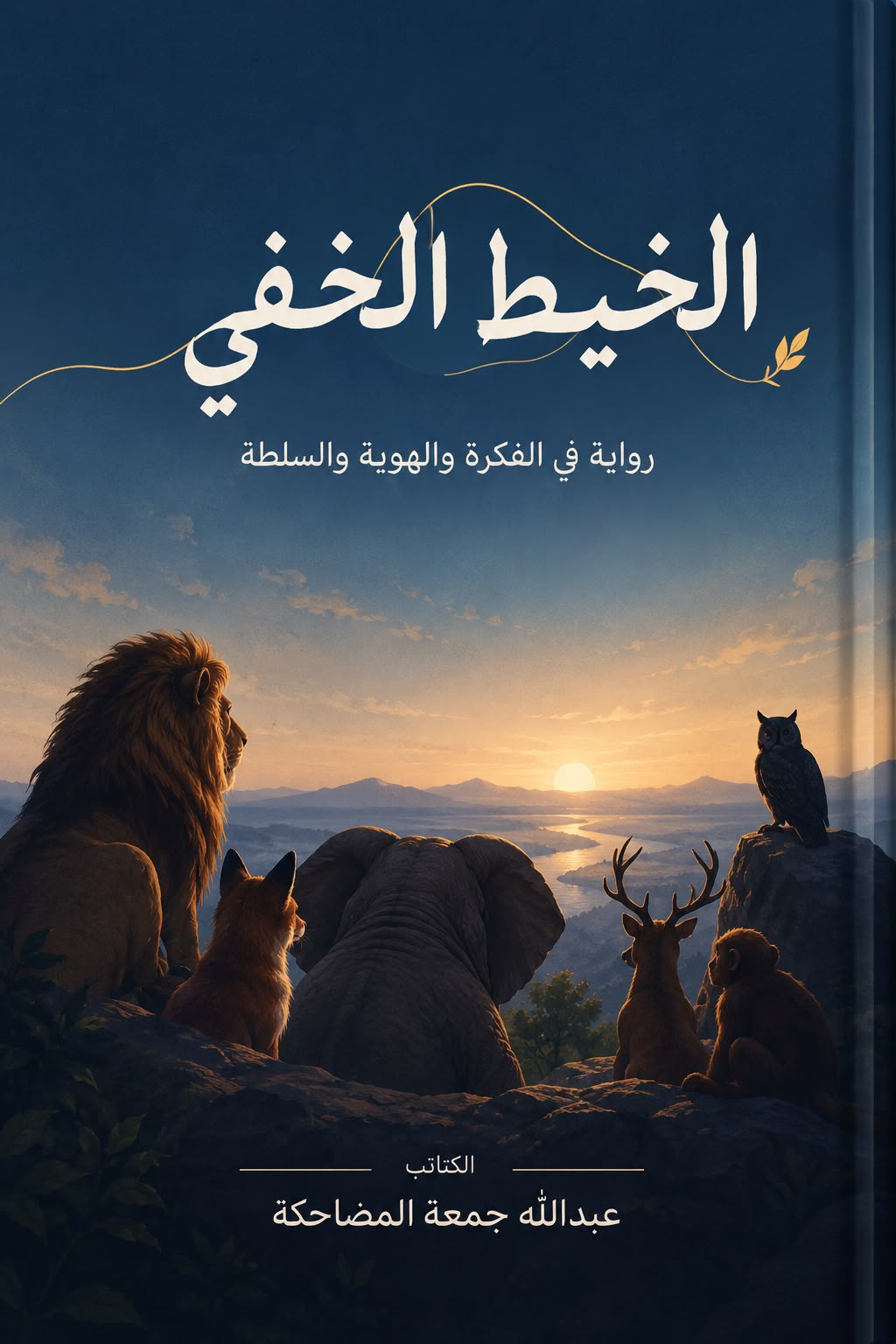
A Novel of the Idea, Identity, and Authority
When a person surrenders their reason to fear, inherited narration (riwāya), and authority, they may imagine that what has been imposed upon them is their own choice; freedom begins with reclaiming questioning, proof, and the capacity to choose.
Summary
An allegorical novel in which animals tell the human story, tracing how an idea begins as a question, then becomes identity, division, and authority. The lion leads the quest, the fox objects and demands evidence, and the elephant brings everyone back to context, while the Qur'an remains a reference by which distinctions are drawn between the text, history, and the hypothesis of narration (riwāya).
Central Idea
When a person surrenders their reason to fear, inherited narration (riwāya), and authority, they may imagine that what has been imposed upon them is their own choice; freedom begins with reclaiming questioning, proof, and the capacity to choose.
Arguments
- The group is not an individual, and what is inherited is not necessarily the text.
- Exegesis (tafsīr) does not become truth merely because it has been repeated over time.
- The most dangerous forms of authority are those that make a person imagine that what is imposed upon them is their own free choice.
- Distinguishing between the Qur'an, history, and hypothesis is a condition for protecting reason from the monopolization of truth.
Chapters
A Human Being Was Here
The beginning of the tale and the question of capacity and choice
The Human Being Who Was Given Choice
Vicegerency and responsibility
The Guest the Animals Cannot See
The entry of temptation into the human journey
When Disobedience Became an Idea
From an individual stance to a transmissible system
Israel and Division
Choice when it opens a historical door
The Idea That Became an Inheritance
The transmission of the idea between generations
When the Idea Became an Identity
The transformation of what is inherited into dividing boundaries
When Narration (riwāya) Became Religion
Human narration (riwāya) when it obscures the text
When the Idea Turned into Power
The passage of meaning into the instruments of authority
The Idol Maker
The power behind the symbol
Ṭāghūt
Obedience to authority when it disguises itself as truth
Jibt — When Illusion Became an Instrument
Manufacturing acceptance through illusion
When Narration (riwāya) Became Stronger than Revelation
Testing what is inherited against the text
The Age of the Great Deception
The acceleration of narration (riwāya) and the algorithm, and the manufacture of the chosen world
When Human Beings Began to Destroy Human Beings
The human cost of fear and the manufacture of the enemy
The Final Chapter
The animals' injunction: Do not give anyone your minds
Excerpt
If the human being possessed reason, choice, and insight… how did they allow someone else to choose for them?