The Geometry of the Cosmos in the Qur'an
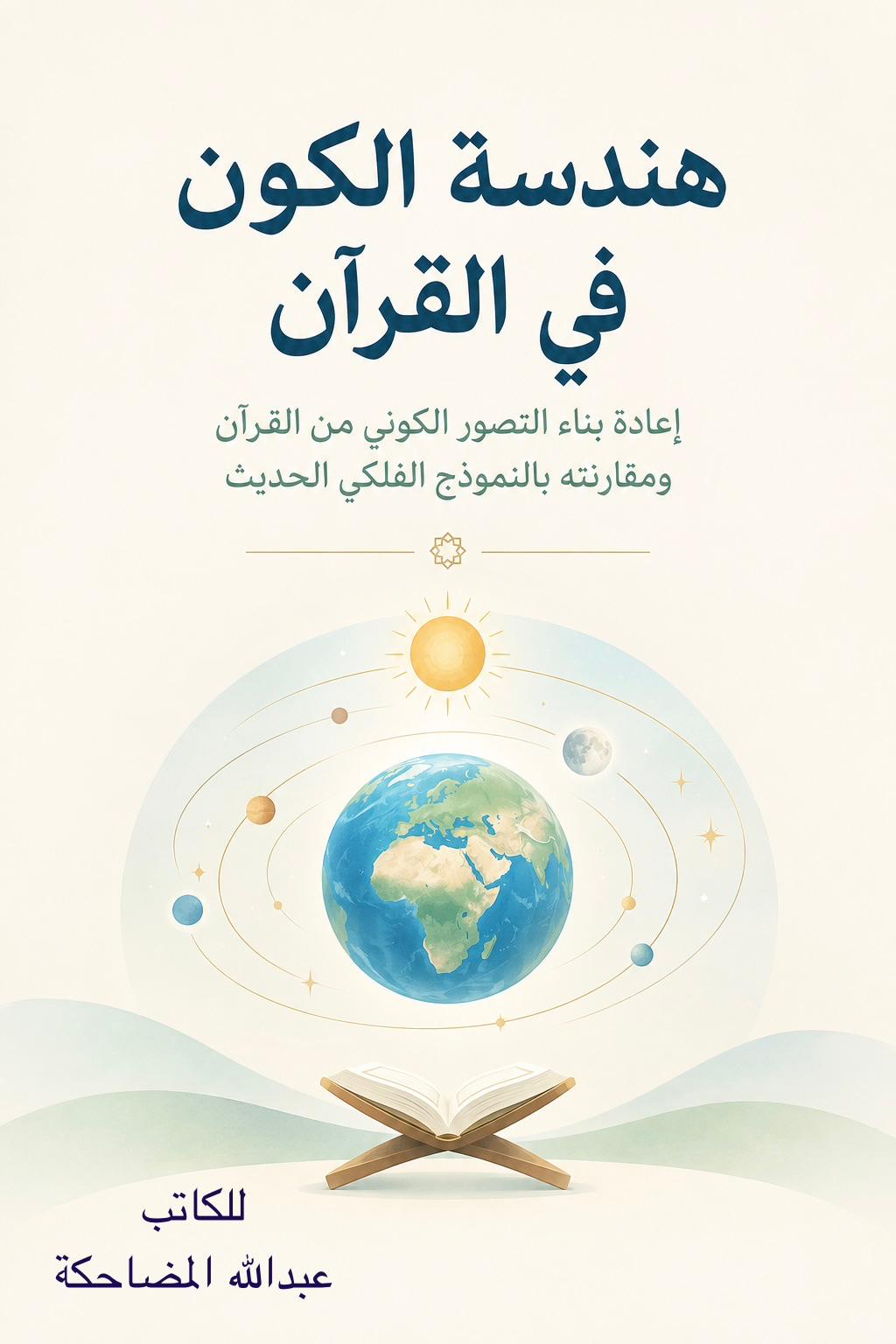
Reconstructing the Cosmic Conception from the Qur'an and Comparing It with the Modern Astronomical Model
The Qur'an depicts an interconnected cosmic structure that is read from within it through a network of terms and relationships, making the earth a reference point and functional center for the human being, not merely a celestial body in a list.
Summary
A reflective inquiry that brings together the verses concerning the heavens, the earth, the sun, the moon, the stars, night, day, and the regions, then reassembles them into a cosmic model derived from the Qur'an itself, rather than imposed upon it from a prior astronomical model. After testing this model's internal consistency, the inquiry compares it with what is known in modern astronomy, explicitly distinguishing between what the Qur'an states, what is inferred from the verses taken together, and what remains an open question.
Central Idea
The Qur'an depicts an interconnected cosmic structure that is read from within it through a network of terms and relationships, making the earth a reference point and functional center for the human being, not merely a celestial body in a list.
Arguments
- A Qur'anic concept is constructed from the recurrence of a term and the diversity of its contexts, not from an isolated verse.
- Moving from the study of an individual term to the study of the system reveals an interconnected cosmic structure.
- A distinction must be drawn between an explicit text, an inference from the verses taken together, and an open question.
- The earth's centrality in the Qur'an is referential and functional before it is a geometrical question.
Chapters
Research Methodology
The Qur'an as the primary source, and study from within the text
Classification of Cosmic Elements
The earth, the heaven, the seven heavens, and the lowest heaven
The Sun, the Moon, the Planets, and the Stars
Radiance, light, adornment, lamps, and projectiles
Motion, Orbit, and Stations
Running, swimming, subjection, and the places of rising and setting
Night, Day, and Interpenetration
Description of the phenomenon and the levels of its explanation
Regions, Passage Beyond, and Authority
The limits of the cosmic structure and the condition for exiting it
Comparison with the Modern Astronomical Model
Points of convergence and points of divergence
Excerpt
The inquiry does not begin with a prior astronomical model to impose upon the Qur'an, but proceeds in the opposite direction: it begins by deriving the cosmic picture from the Qur'an itself, then reassembles its elements into an interconnected whole.